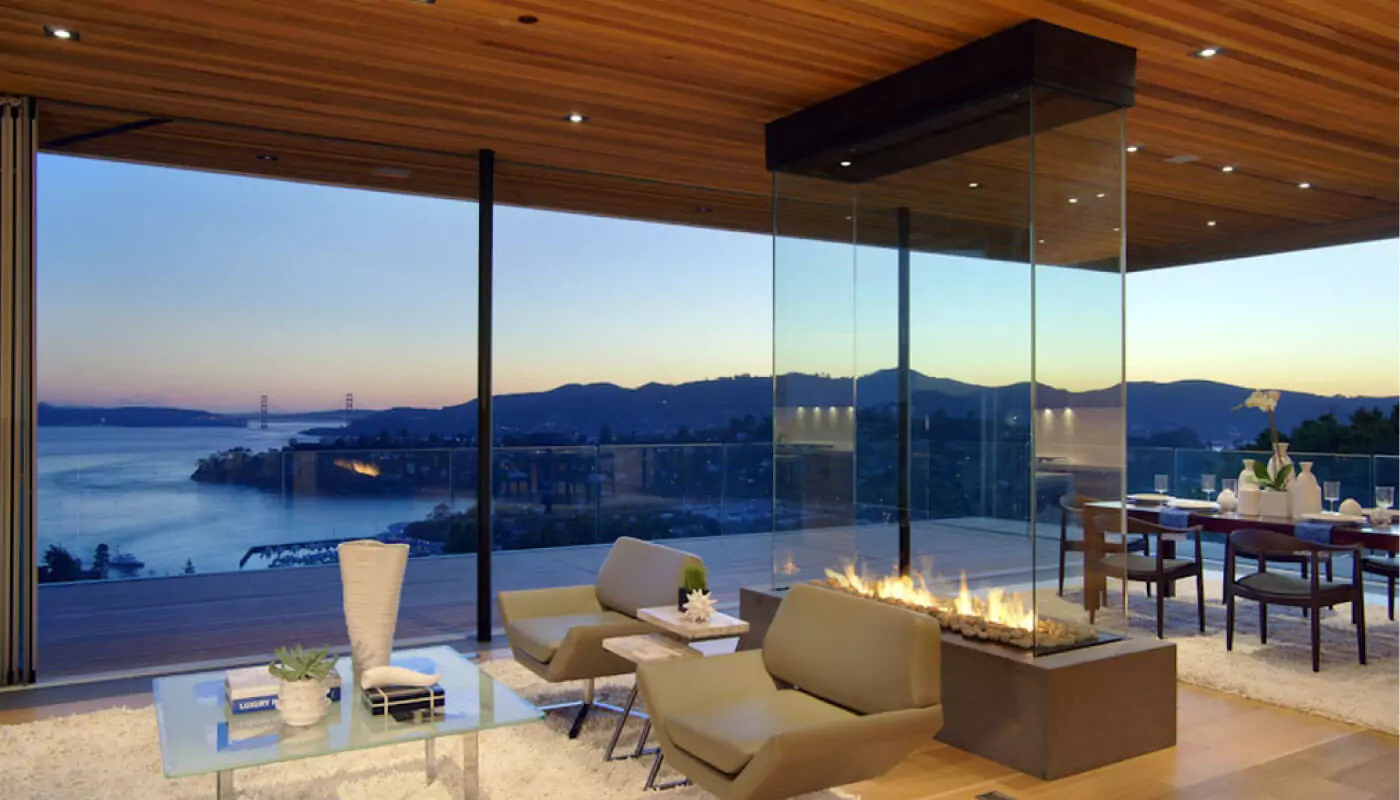
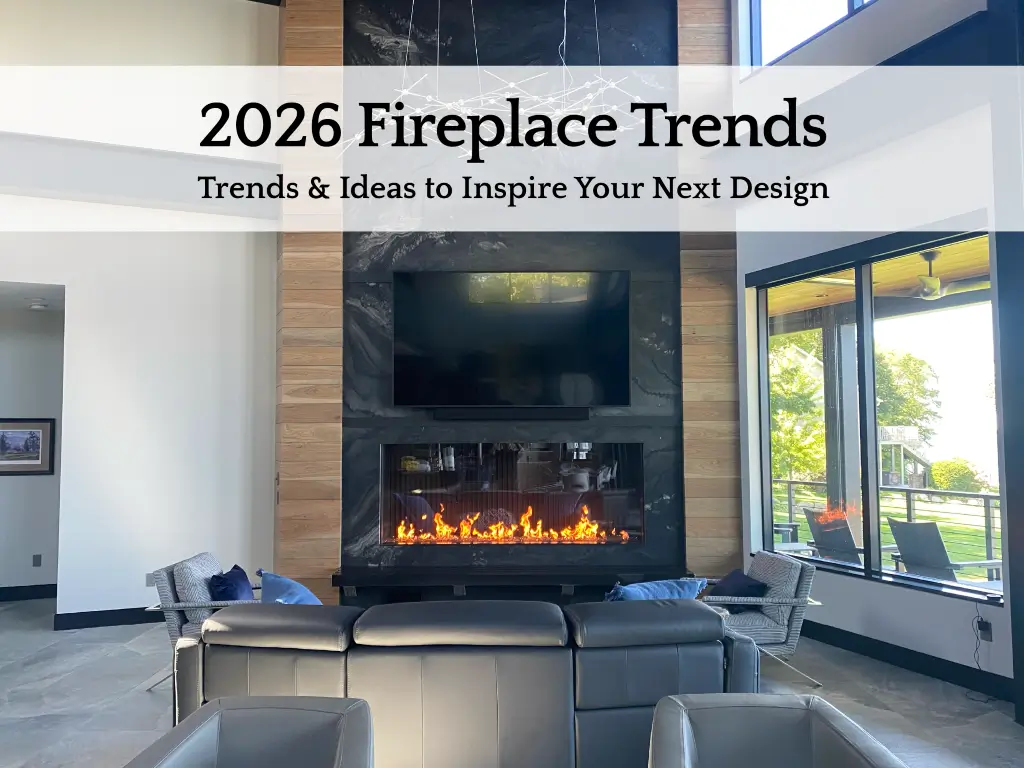
Fire Is No Longer Just a Feature. It Is the Foundation of the Space.
Fire has always held a central place in how we experience a space. It draws us together, anchors gatherings, and creates a sense of comfort that feels almost instinctive, something we’ve carried with us for thousands of years.
For generations, fireplaces were defined primarily by function. They were sources of warmth, architectural accents tucked along the perimeter of a room, or traditional focal points above which you’d hang a painting or mirror. Useful? Absolutely. But fairly predictable.
The latest fireplace design trends show a clear shift toward architectural integration, thoughtful placement, and highly-customized solutions that feel intentional rather than added after the fact.
This evolution matters for anyone exploring modern fireplace ideas, planning a luxury home, or specifying products for a high-end residential or commercial project. Today, designers and homeowners aren’t asking how to add a fireplace. They’re asking what role fire should play in the overall experience of the space. Should it divide rooms? Create atmosphere without heat? Become something you walk around rather than simply face?
The fireplace design trends of 2026 reflects this fundamental change. Fire is becoming architectural, experiential, and increasingly central to how spaces are planned and lived in. These modern fireplace ideas build on what’s worked beautifully in recent years while expanding where fire can live and how it’s experienced.
Below, we explore the most important fireplace trends for 2026 and what they mean for designers, architects, and homeowners who want spaces that feel cohesive, elevated, and enduring.
Fire as Architecture
1. Large-Scale Linear Fireplaces
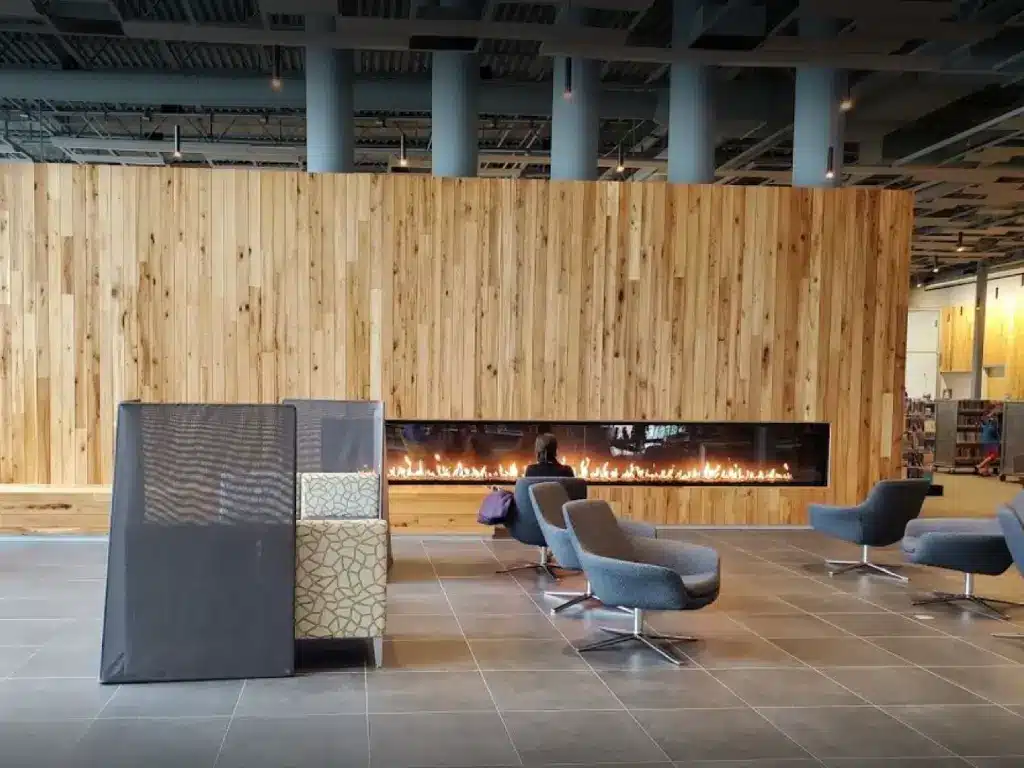
Large-scale linear fireplaces are no longer viewed as a passing trend. They have become a defining element of modern fireplace design, especially in luxury homes and open-concept environments.
By stretching the flame horizontally, often eight feet or longer, these fireplaces reinforce architectural lines and create a strong visual anchor. Designers are increasingly specifying custom dimensions that respond to room proportions rather than relying on standard sizes. The goal is to make the fireplace feel integrated into the architecture instead of appearing as a decorative addition.
This approach works particularly well in great rooms, loft-style living spaces, and contemporary homes where visual continuity is essential. A long, low flame can ground an entire wall, guide the eye across the room, and provide a sense of balance that supports both furniture placement and circulation.
The fireplace becomes part of the structure itself, supporting those clean, flowing layouts where continuity and proportion matter most.
When fire stretches across a space like this, it fundamentally changes how the room is read. The eye follows the flame, and suddenly you have a horizontal anchor that grounds everything else.
Our Linear Gas Photo Gallery contains some great examples of how fire becomes part of the structure itself.
2. Frameless and Minimalist Fireplace Designs
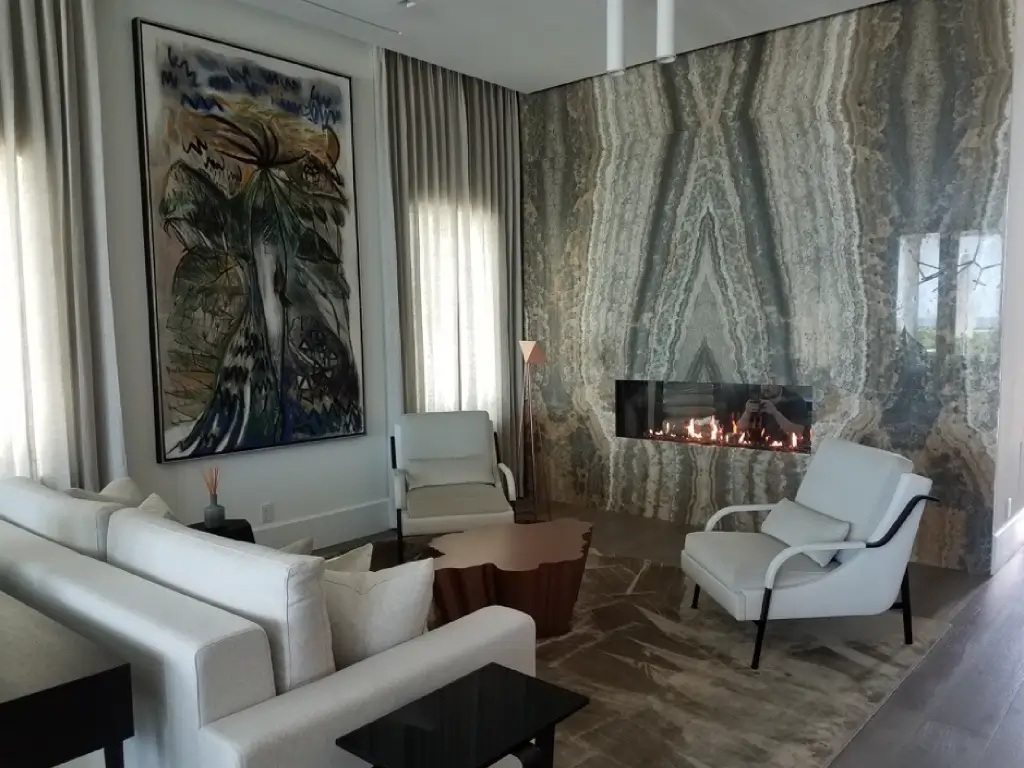
Minimalist fireplace designs continue to gain momentum in 2026. Frameless openings, flush installations, concealed hardware, and simplified detailing allow the flame to become the primary visual element.
This does not mean these spaces feel cold or overly stark. Instead, restraint allows the fire to feel more powerful. When ornate mantels and heavy surrounds are removed, the flame itself becomes the focal point. Surrounding materials such as plaster, concrete, steel, or stone are used intentionally to support the design rather than compete with it.
Contemporary fireplace styles increasingly favor this sense of clarity. Designers are creating calm interiors where every element serves a purpose, and the fireplace becomes a natural part of the architectural language.
This approach reflects a growing preference for calm, intentional spaces where nothing competes with the fire itself. Surrounding materials, whether it’s smooth concrete, blackened steel, or seamless plaster, act as a quiet backdrop, reinforcing presence without excess.
The restraint is deliberate. And when it’s done well, it shows.
For inspiration on how simplicity can expand creative freedom, give our Modern Fireplace Styles for Contemporary Homes a read.
3. Fireplaces Used as Architectural Dividers
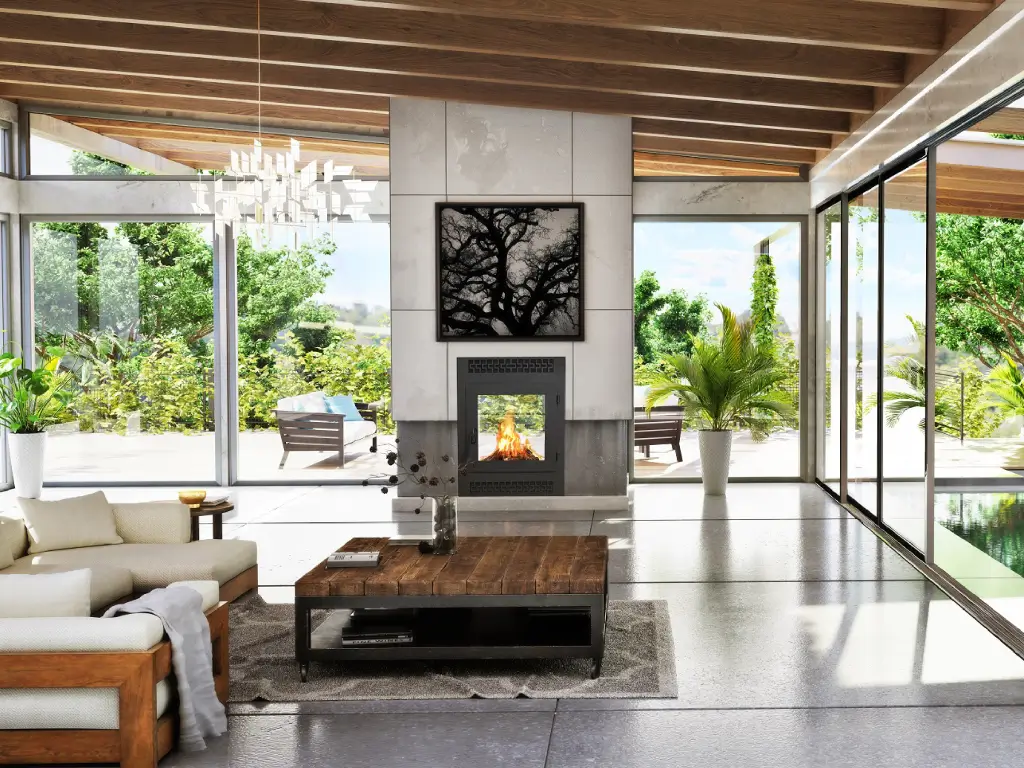
One of the most compelling modern fireplace trends is the use of fireplaces as architectural dividers. Rather than occupying a single wall, see-through and multi-sided fireplaces are now being used to define zones within open-floor plans.
See-through and multi-sided designs allow fire to divide rooms while maintaining openness and visual connection. You might place a double-sided fireplace between a living room and dining area or use a three-sided unit to separate a primary suite from a bathroom without losing that sense of flow. These designs maintain openness while still offering a sense of definition.
For designers, this creates flexibility. Fire can provide separation without the visual weight of a wall. For homeowners, it creates a more dynamic experience where the fireplace connects spaces rather than closing them off.
This approach supports modern floor plans where flexibility matters as much as definition. Fire becomes a shared element that connects spaces instead of closing them off, which is exactly what today’s homeowners and designers are looking for.
In our projects, we’ve seen this approach replace walls that designers didn’t want but thought they needed. Fire does the work of separation without the barrier.
For examples of this approach in action, check out our gallery of See-Through Gas and Wood Fireplaces.
Immersive and Multi-View
4. Open-View and Glass-Free Fireplaces
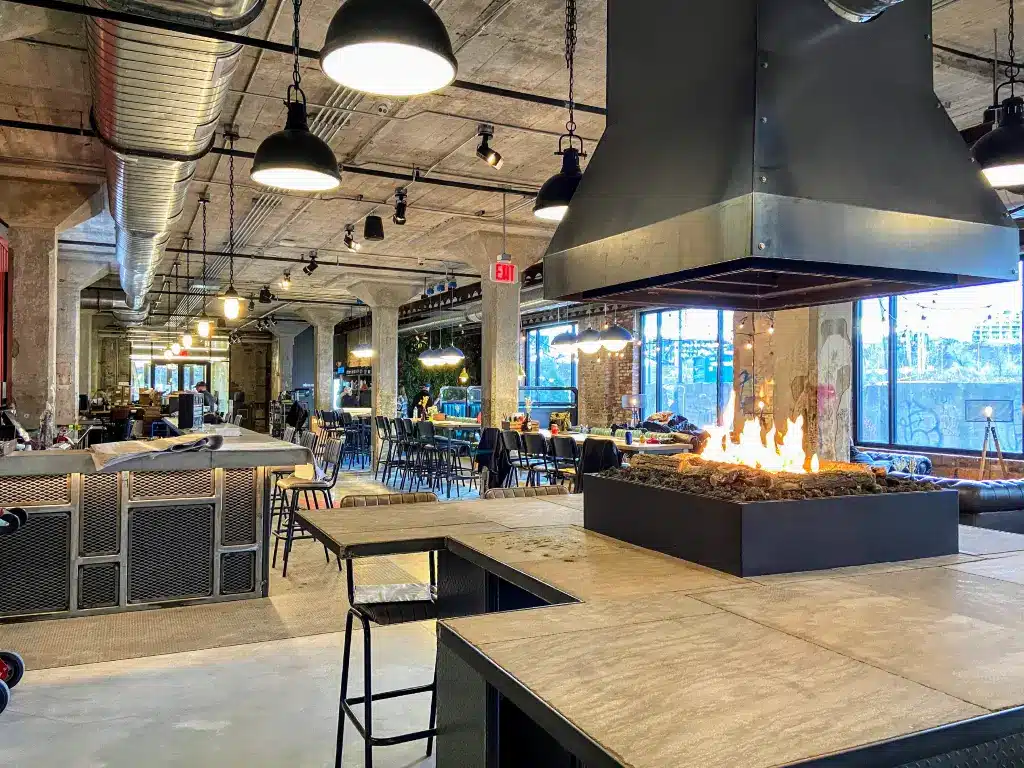
Open-view and glass-free fireplaces represent a clear shift toward fire that feels raw, expressive, and completely uninterrupted. Without visible barriers, the flame becomes more expressive. Movement, depth, sound, and color variation are experienced more directly, which creates a stronger emotional response.
These installations are especially popular in hospitality environments and high-end residences where atmosphere plays a central role in the overall experience. Hotels, restaurants, and luxury homes are using open-view fireplaces to create moments that feel memorable and authentic.
The flame does the talking. Everything else steps back.
5. Four-Sided Fireplaces
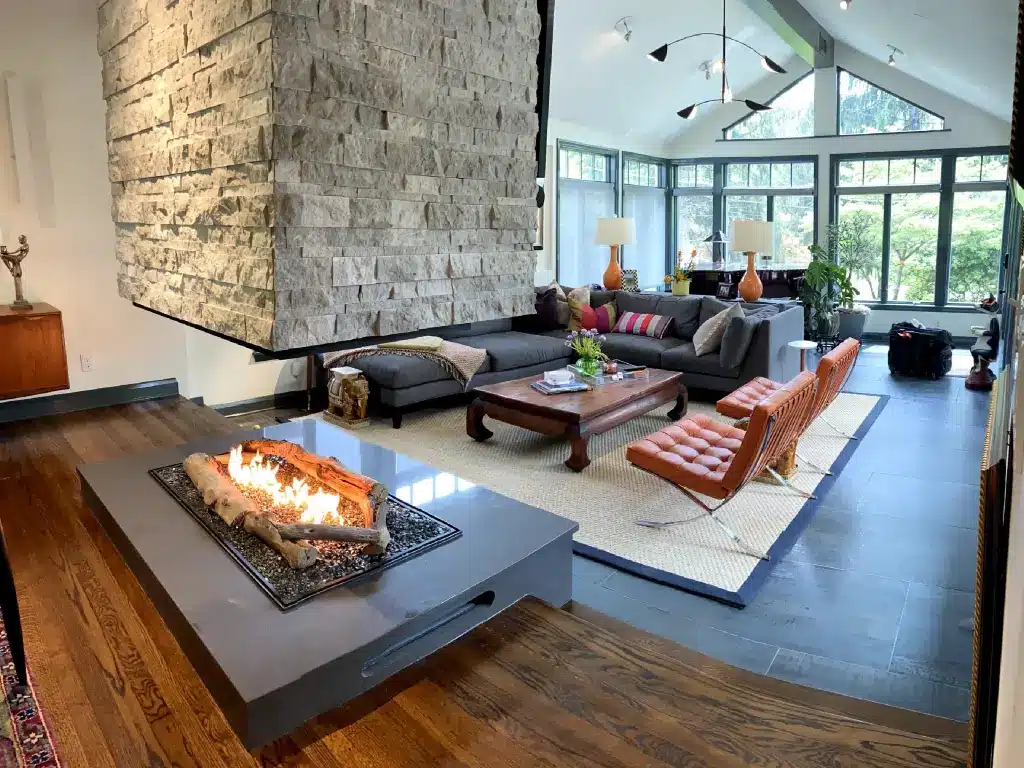
Four-sided fireplaces take immersion even further by allowing the flame to be experienced from every angle.
Positioned as true centerpieces, often in the middle of a great room, lobby, or outdoor courtyard, they invite people to gather around the fire rather than face it from a single direction. There’s something primal and social about circling a flame. It changes the dynamic entirely.
This arrangement naturally encourages gathering. Seating layouts often form around the fireplace, changing how people move through and occupy the space. Instead of orienting furniture toward a wall, the room is organized around the fire itself.
For examples of fire used as a central architectural element, browse our Four-Sided Fireplaces Gallery.
6. Island-Style Fireplaces
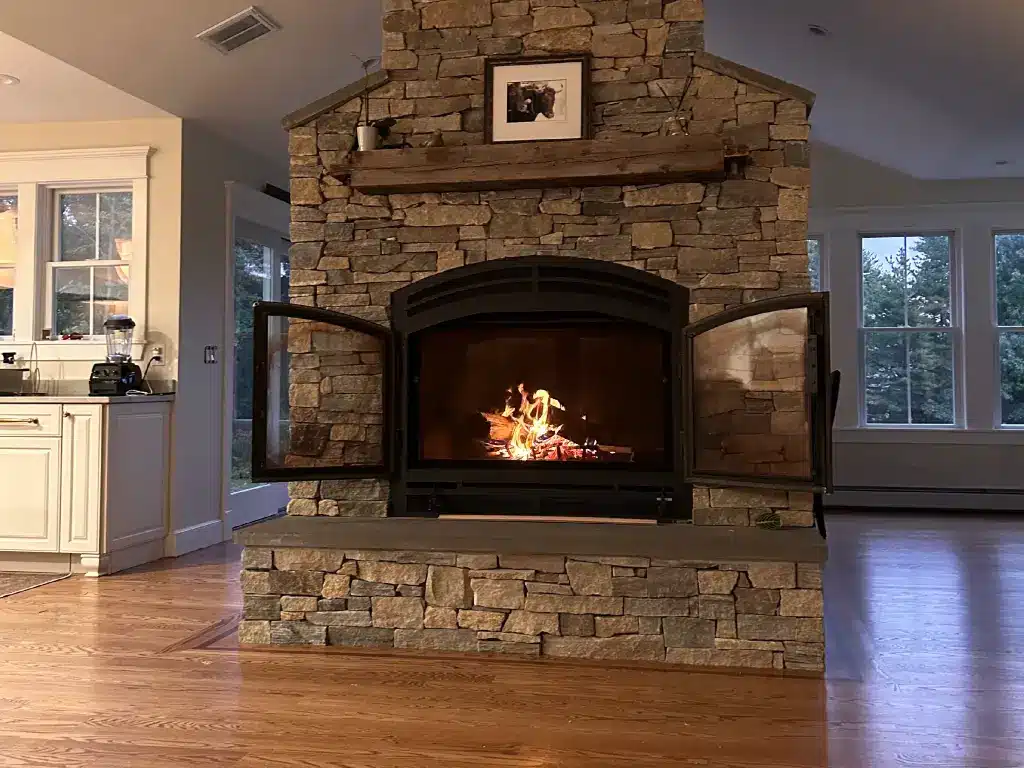
Island-style fireplaces place fire at the center of a space rather than along a wall. The flame becomes a destination that organizes seating, conversation, and movement.
This trend is particularly visible in luxury homes where entertainment is central to the lifestyle. The fireplace becomes a natural gathering point, shaping how people interact, move, and linger. It also offers greater flexibility in how the surrounding architecture and furniture are arranged.
Want to get inspired? Our See-Through Wood Fireplace Gallery contains some great examples.
Fire Beyond the Wall
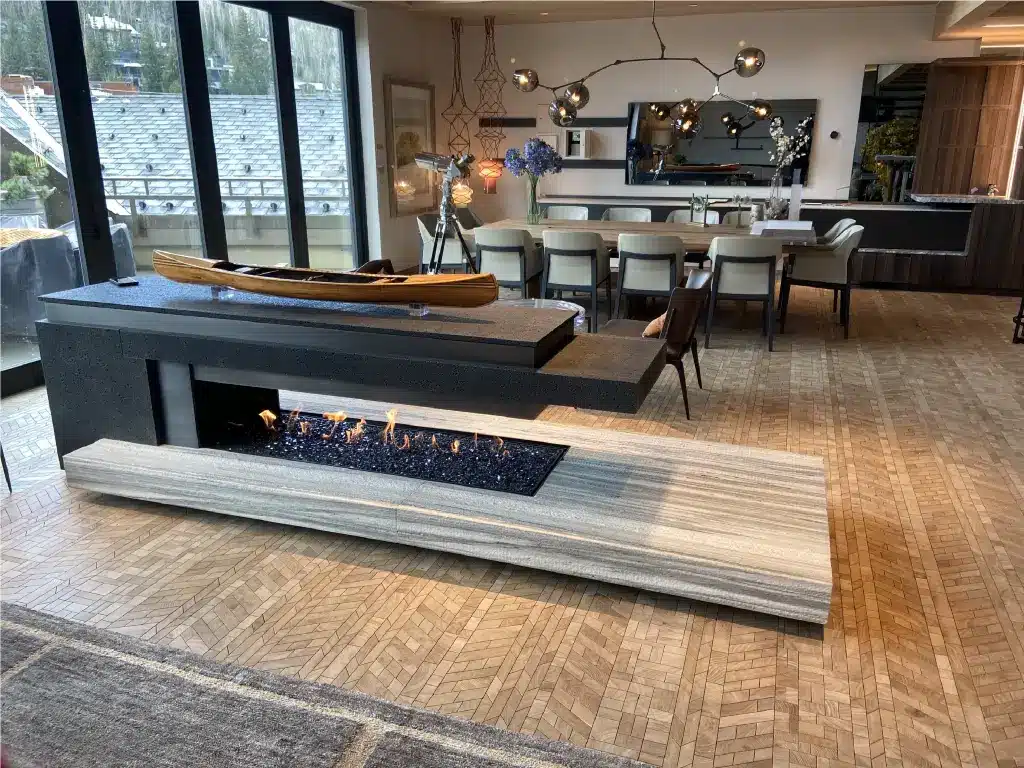
7. Fire Used Beyond Traditional Hearth Locations
Fire is no longer confined to the usual spots: the living room wall, the bedroom corner, the outdoor patio.
One of the defining fireplace trends of 2026 is the expansion of fire into spaces where it was rarely seen in the past. Designers are integrating fireplaces into corridors, entryways, transitional zones, and even partition walls.
In these placements, fire acts as both an emotional anchor and a navigational element. It draws you forward. It marks transitions. It makes you stop and notice.
We’re seeing fire specified much earlier in the design process as a result, not as an add-on, but as a foundational element that influences layout, circulation, and spatial hierarchy.
For examples of how fire can guide circulation and define unexpected moments, check out our Design Without Limits article.
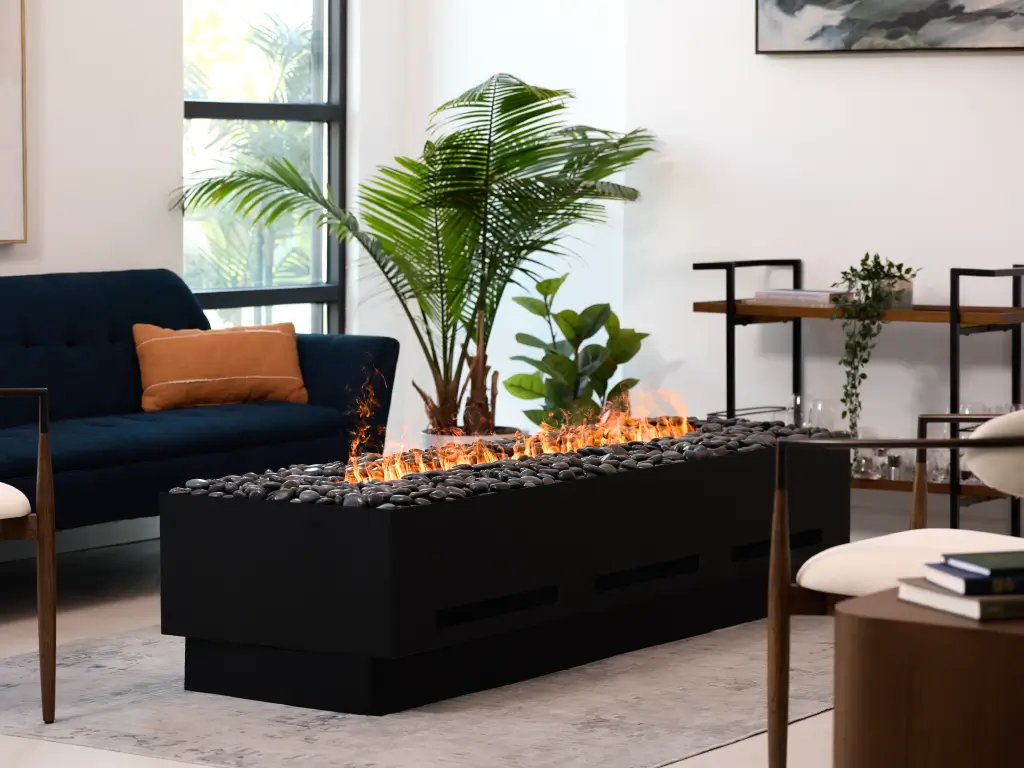
8. Fire in Unexpected Places
Advances in technology and safety standards are allowing fireplaces to appear in locations that were once considered impractical. Interior rooms with no exterior walls, suspended fireplace designs, and installations integrated into furniture-like elements are becoming more common in high-end projects.
Vapor fireplace trends play an important role here, making it possible to introduce realistic flame effects without heat, venting, or emissions. This opens the door (sometimes literally) to applications throughout a space that would have been impossible with traditional gas or wood-burning systems.
And designers are walking right through that door with some genuinely innovative ideas.
To see what those look like, check out our How Designers Use Vapor Fireplaces to Define Space and Flow post.
Commercial and Hospitality Influence
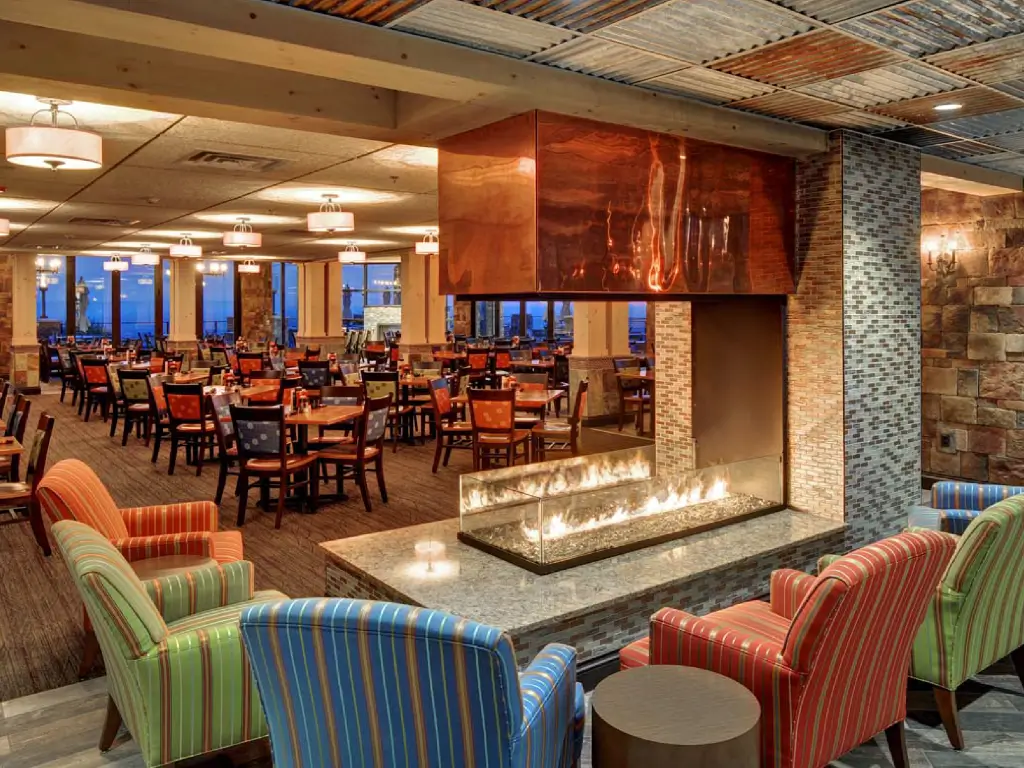
9. Hospitality and Commercial Fireplace Design is Leading the Way
Here’s something we’ve noticed: hospitality environments continue to lead innovation in fireplace design, often by several years. Hotels, restaurants, resorts, and commercial spaces often serve as testing grounds for new ideas in scale, placement, and experience.
Restaurants, hotels, resorts, and high-end public interiors use fire strategically to establish mood, reinforce brand identity, and encourage guests to stay longer (and spend more). Think about the last memorable hotel lobby you walked through. Chances are, there was an impressive fireplace anchoring the space.
Homeowners frequently draw inspiration from these environments. A memorable experience in a boutique hotel can directly influence what someone wants to recreate in their own living room. Over time, the most successful commercial fireplace designs migrate into residential architecture and become part of broader interior design trends.
What starts with hospitality rarely stays there. The best ideas migrate into high-end homes, then eventually become more accessible as the market adapts.
For examples of fire used intentionally in public and commercial spaces, give our How Commercial Spaces Benefit from Indoor/Outdoor Fireplaces post a read.
Technology, Wellness, and Experience
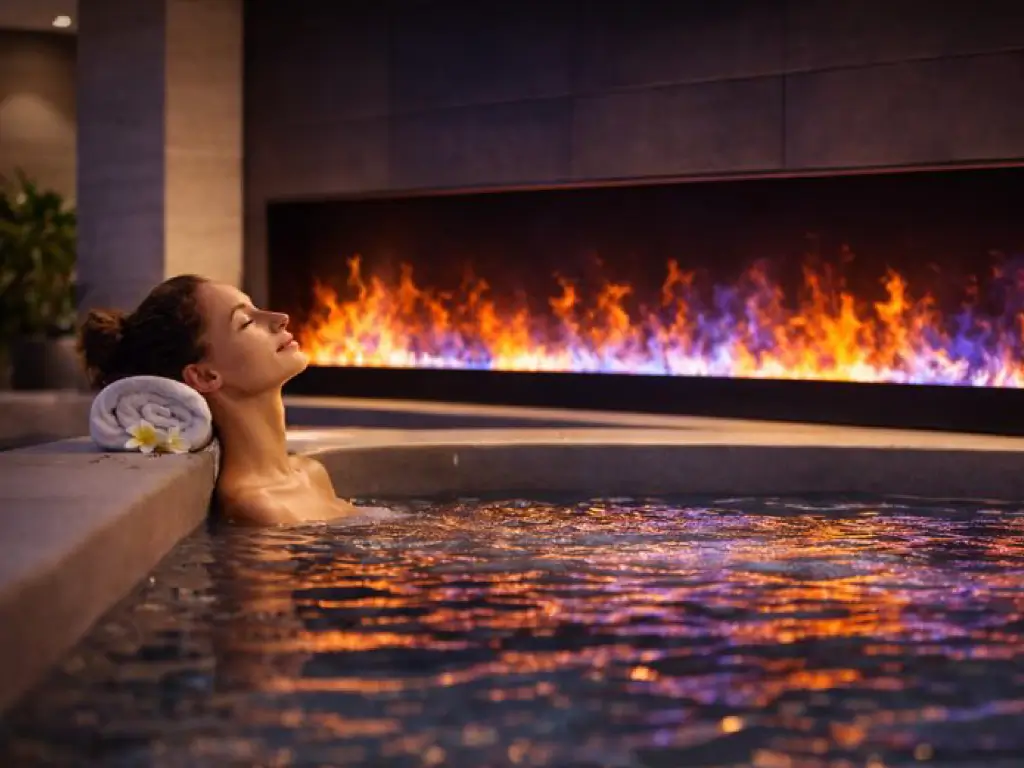
10. Water Vapor Fireplaces for Interior and Commercial Spaces
Water vapor fireplaces are genuinely reshaping how designers think about safety, wellness, and creative flexibility.
By creating realistic flame effects using ultrasonic technology and LED lighting (without actual combustion, heat, or emissions), these systems allow “fire” to exist in spaces that were previously completely off-limits. For example:
- Interior conference rooms
- Wellness centers
- Bedrooms where traditional fireplaces pose safety concerns
- Cruise ships
They support wellness-driven design priorities (no air quality concerns, no allergens, no carbon monoxide) while offering unprecedented placement freedom in both residential and commercial interiors. And they do all this without sacrificing visual impact. The flame effects are remarkably convincing.
Our design teams have seen this flexibility drive some of the most creative and unexpected fireplace placements we’ve worked on in years.
For a deeper look at how this technology works, see our Cool Flame Fireplace Technology and The Science Behind the Flame posts.
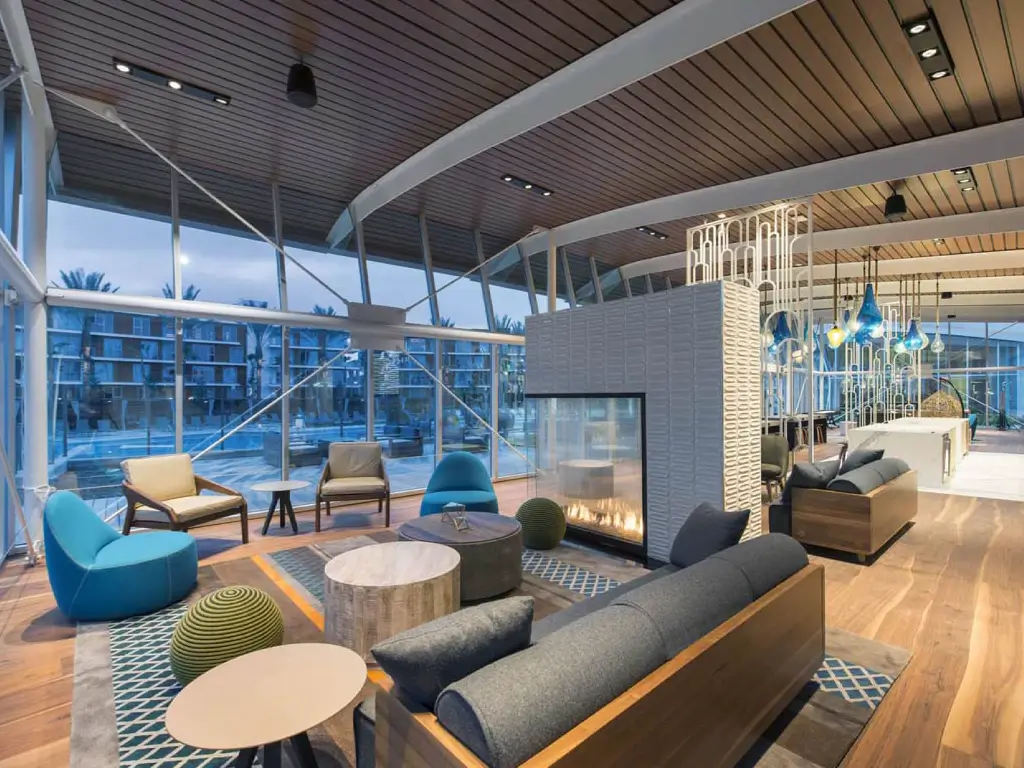
11. Fire Designed as Experience Rather Than Heat
Across gas, wood, electric, and vapor systems, there is a clear shift toward valuing fire for atmosphere rather than purely for warmth. While heat remains important in certain climates and applications, many designers are prioritizing visual presence, rhythm, and emotional impact.
Yes, some people still want and need the heat, especially in mountain homes or northern climates. But more often, designers prioritize mood, rhythm, visual presence, and emotional impact. They’re allowing flame to shape the experience of a space without being defined by BTU ratings or heating efficiency.
How fire feels matters more than what it technically produces.
This shift has opened up possibilities for where and how fireplaces are used, especially in moderate climates or well-insulated modern homes where supplemental heating isn’t really necessary.
For insight into this philosophy and approach, see The Hidden Wellness Benefits of Vapor Fireplaces post.
Customization and Lifestyle
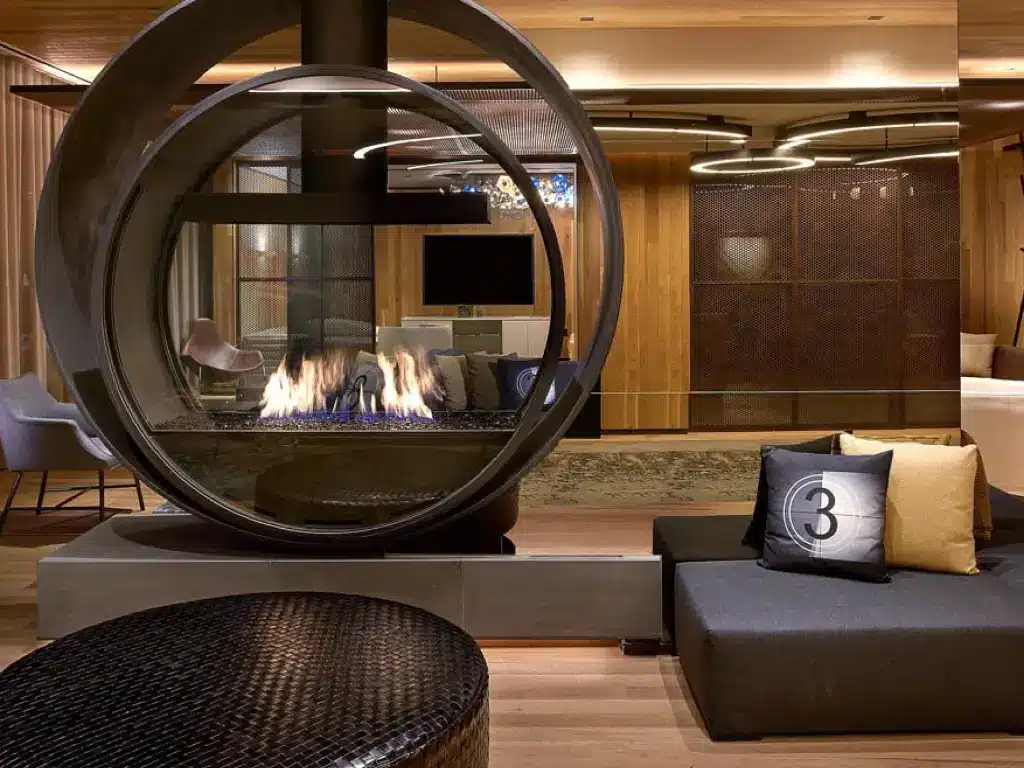
12. Fully Custom and One-of-a-Kind Fireplace Designs
Here’s the bottom line: customization remains absolutely central to luxury fireplace design. While standard models have their place, high-end residential and commercial projects often demand solutions that go beyond catalog options.
Bespoke dimensions, unique configurations, unusual fuel types, and highly tailored installations allow fire to be designed around how people actually live and use a space.
From seating-driven layouts (where the fireplace dimensions respond to furniture placement) to multi-room integration (one fireplace serving multiple spaces), custom fireplaces reflect personal lifestyle and architectural intent rather than catalog limitations.
This is where Acucraft’s custom manufacturing capabilities continue to set us apart. If you can imagine it, we can design, build and engineer it safely.
For examples of fully bespoke fire design, check out our Unique Custom Gas Fireplaces Gallery to see what’s possible.
Where Fireplace Design Is Headed Next
The fireplace design trends of 2026 reflect evolution rather than reinvention.
Fire is becoming more flexible, more expressive, and more intentional. It’s expanding beyond the traditional living room wall and adapting to new technologies, lifestyles, and spatial priorities. Designers are thinking about fire earlier in the process, treating it as a foundational element rather than a finishing touch.
The question is no longer whether fire belongs in a space. It’s how intentionally you use it.
Whether through bold architectural statements, immersive multi-view installations, or vapor systems that unlock entirely new placement possibilities, modern fireplace ideas continue to redefine how spaces feel and function.
Acucraft supports both the timeless appeal of classic fireplace design and the evolving applications that define what comes next. From custom architectural fireplaces to innovative modern installations, the goal remains the same: create fire features that elevate the way people experience space.
Explore more fireplace design trends or contact us to begin designing your next fireplace.