

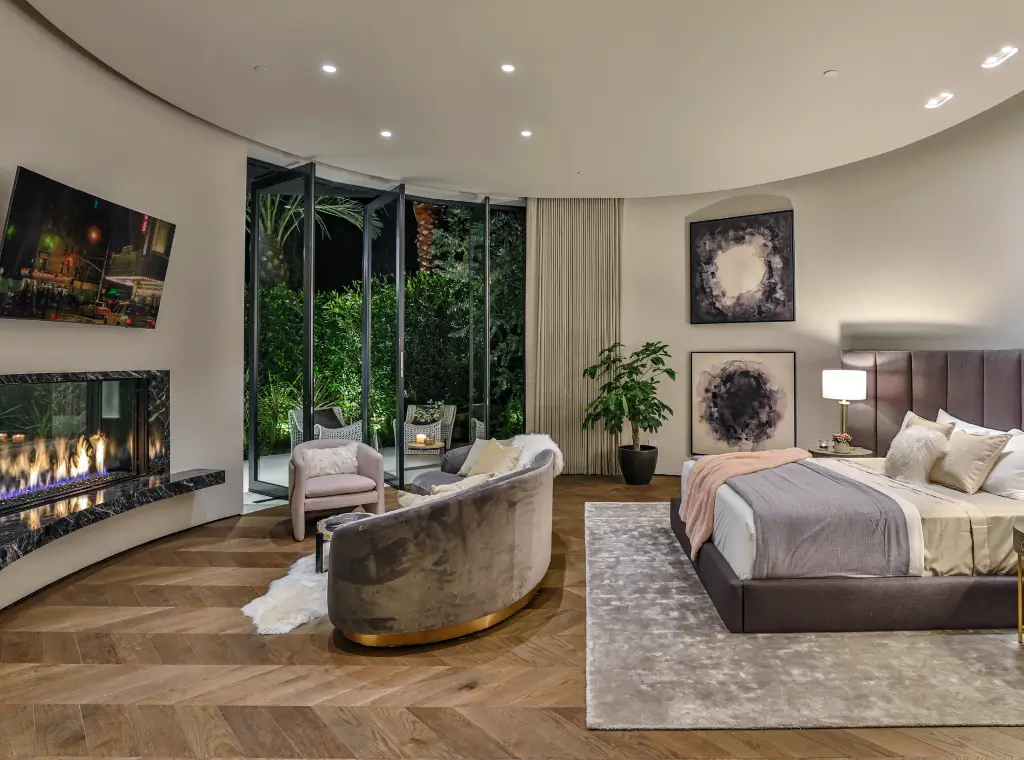
A gas fireplace layout can either interrupt a floor plan or bring it together
Fire has always shaped how people gather. In a custom home, it often becomes the visual and emotional anchor that gives a space purpose. A gas fireplace does more than provide warmth. It influences where people sit, how they move through a room, and how spaces connect to one another.
The challenge is choice. Today’s gas fireplaces offer multiple layout options, each with a different effect on flow, sightlines, and spatial connection. Selecting the wrong layout can disrupt a floor plan, while the right one can reinforce it in subtle but powerful ways.
That is why modern gas fireplace layouts should be guided by floor plan intent rather than trends. When layout leads the decision, fire becomes part of the architecture instead of a feature added later.
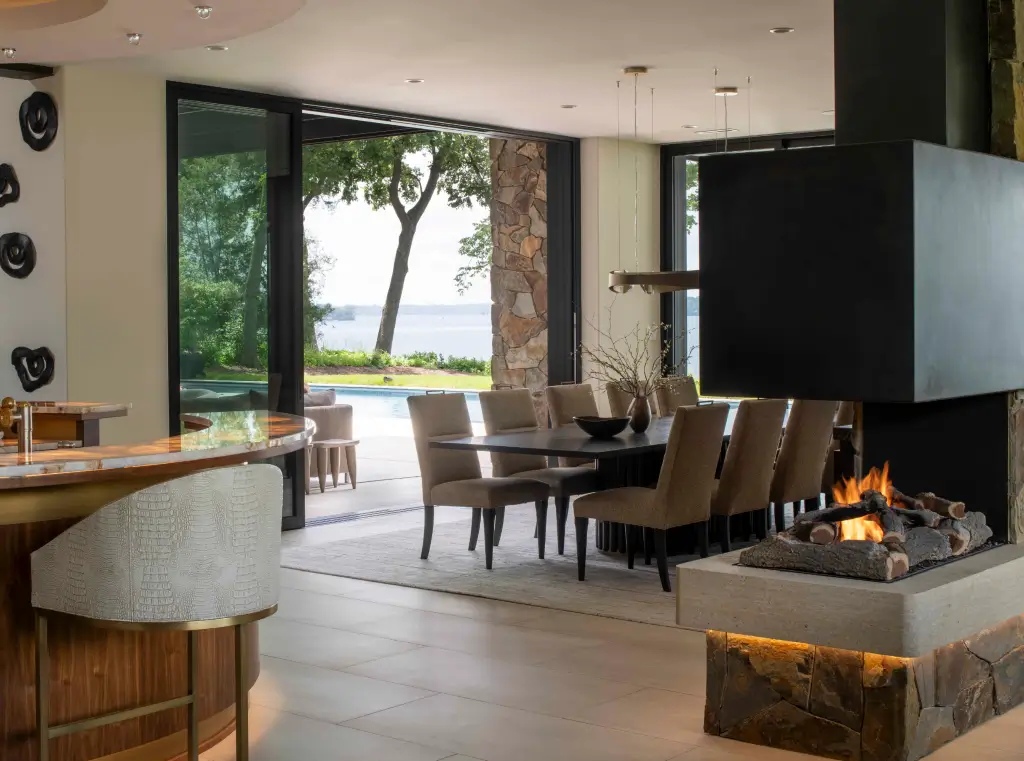
Why Fireplace Layout Matters as Much as Design Style
Design style often draws the most attention, but it’s the layout that quietly determines how successful a fireplace will be. While finishes and materials shape how a fireplace looks, layout defines how it functions within the space.
A fireplace layout affects circulation, furniture placement, and visual balance. It can open a room up or unintentionally divide it. When treated as an architectural element, a gas fireplace helps organize space rather than compete with it.
In the most successful custom homes, layout decisions are made early and with intention. Fire supports how the space will be lived in every day, not just how it will appear in renderings.
Linear Gas Fireplaces: Clean Lines, Clear Intent
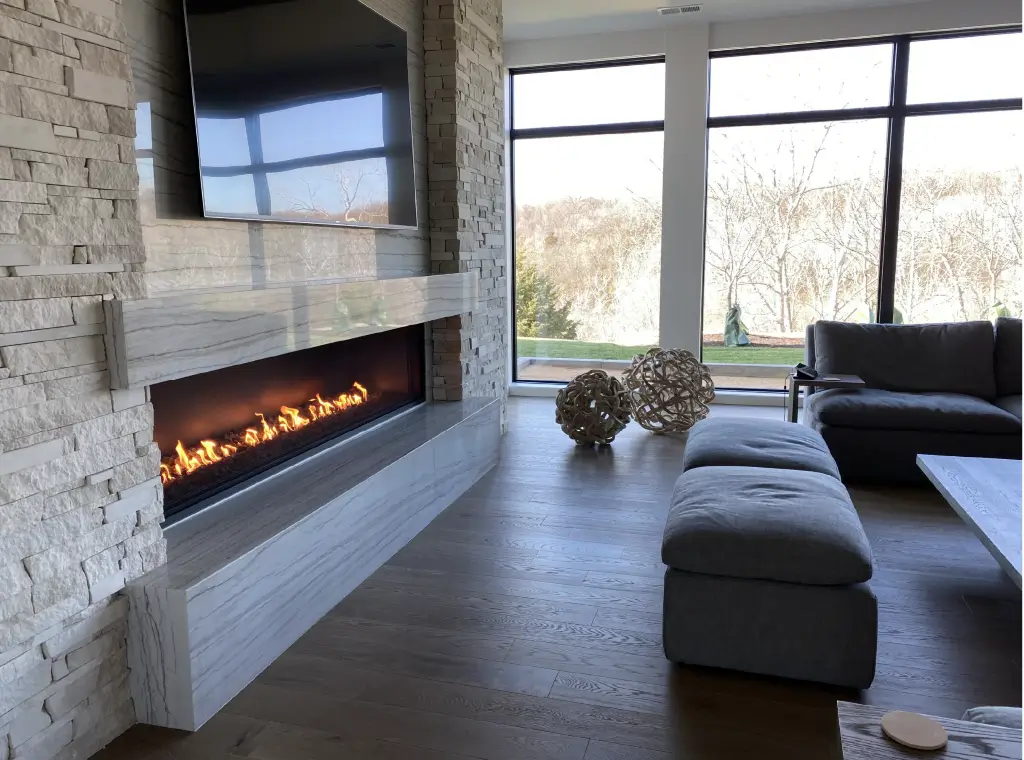
Linear gas fireplaces remain one of the most widely used layouts in modern residential design. Their horizontal form reinforces clean lines and works naturally with contemporary architecture.
In great rooms and open living areas, linear gas fireplaces create a strong focal point without overwhelming the space. They are especially effective along feature walls or in rooms with long sightlines, where proportion and balance matter. Because the flame is presented on a single plane, attention stays focused and controlled.
Linear fireplaces also support flexible furniture arrangements. By remaining wall-based, they allow seating to be oriented naturally without interrupting circulation. Our Linear Fireplace Gallery contains some great examples of how this layout can shape spaces.
Peninsula Gas Fireplaces: Shaping Space Through Fire
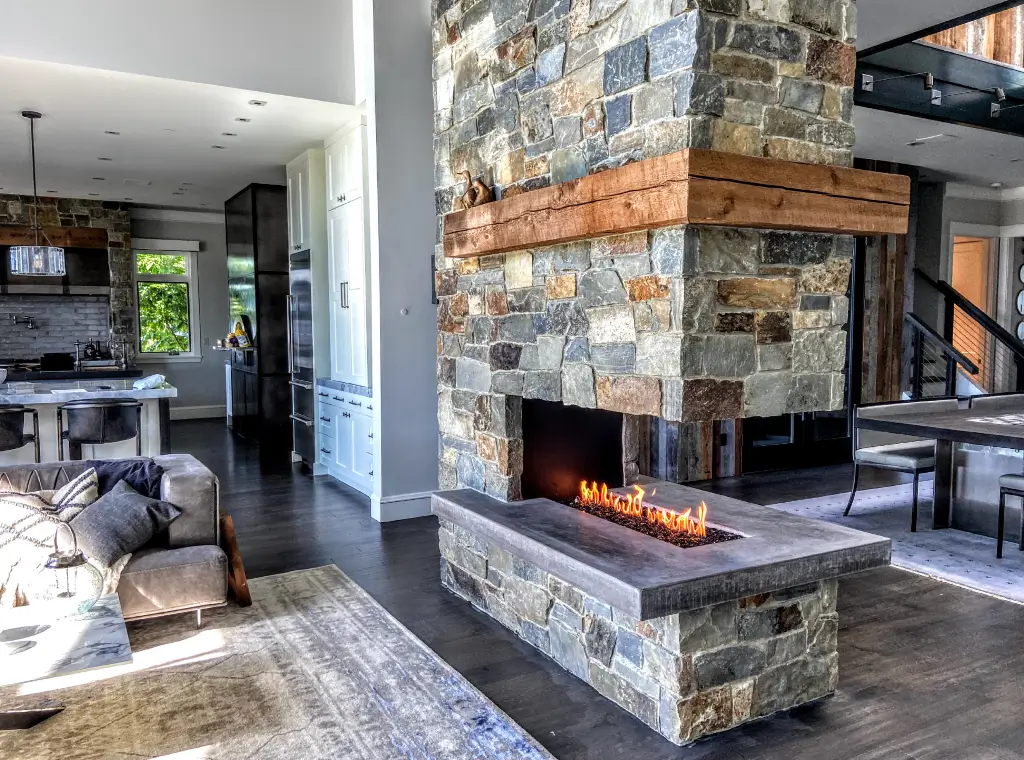
Peninsula gas fireplaces extend into a space rather than sitting flat against a wall. With multiple viewing angles, they create connection while still providing separation.
This layout is particularly effective in transitional areas, such as between kitchens and living spaces, where defining zones matters without closing rooms off. A peninsula gas fireplace guides movement through the floor plan and helps organize large, open interiors.
By balancing openness and structure, peninsula fireplaces support flow while adding depth and visual interest.
To see how layouts work in real spaces, explore our Peninsula Gas Fireplace Gallery.
Four-Sided Gas Fireplaces: A Shared Flame at the Center
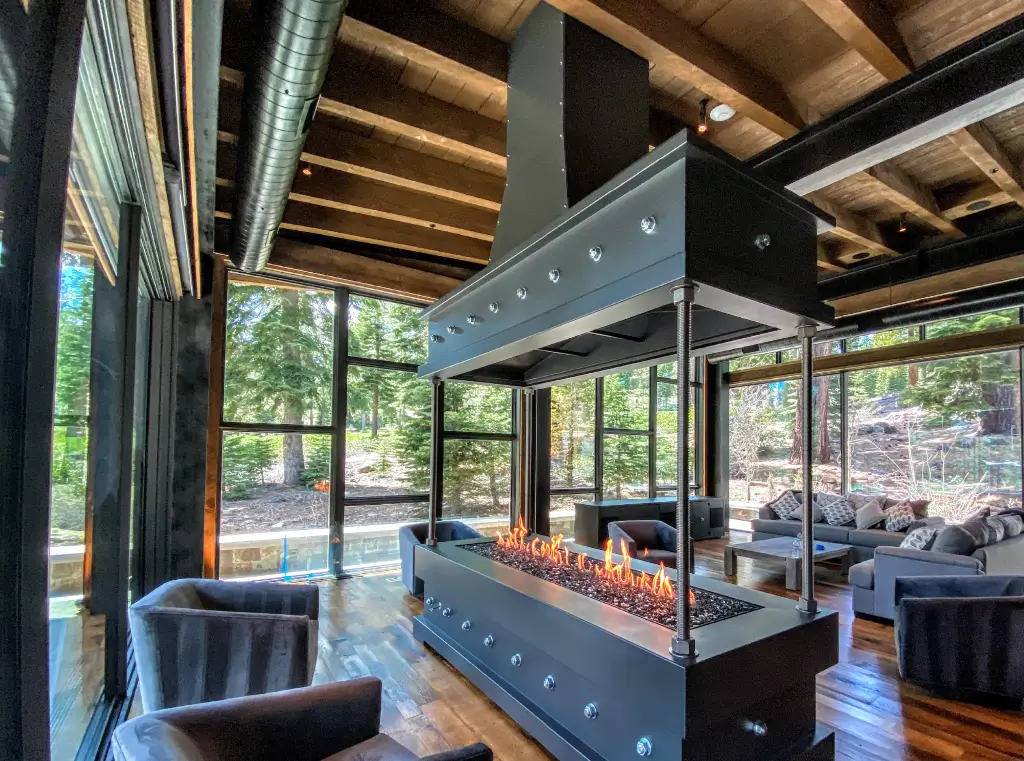
Four-sided gas fireplaces, sometimes referred to as island fireplaces, offer the most immersive layout option available. With the flame visible from every direction, they operate as sculptural elements within space rather than traditional, front-facing features.
This configuration performs best in large, open environments where gathering happens from multiple sides. In hospitality-inspired residential designs or expansive living areas, four-sided gas fireplaces establish a shared focal point that feels intentional, balanced, and inclusive.
With no defined front or back, the flame experience remains consistent throughout the room. Circulation naturally flows around the fireplace, encouraging movement, interaction, and conversation while preserving a sense of openness.
For inspiration, check out our Four-Sided Gas Fireplaces Photo Gallery.
Indoor-Outdoor Gas Fireplaces: Fire Without Boundaries
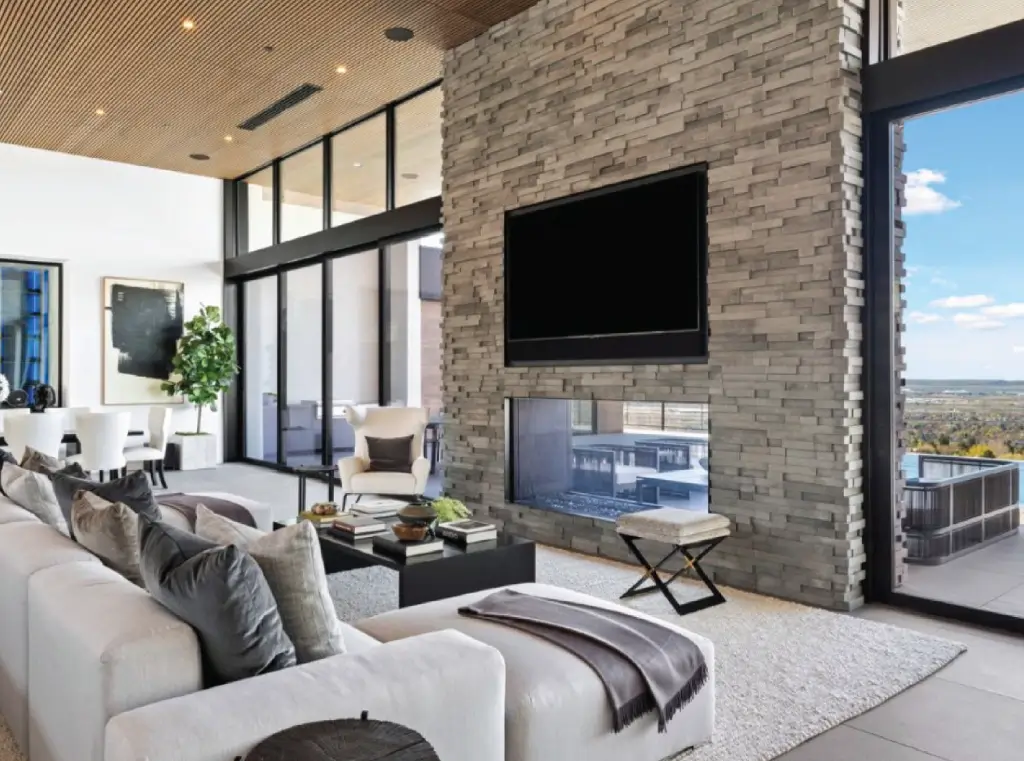
Indoor outdoor gas fireplaces are designed for homes where the boundary between interior and exterior spaces is intentionally softened. In these settings, fire functions as a visual and experiential link rather than a feature confined to one side of a wall.
Layout becomes especially critical in this context. Fireplaces that prioritize visibility and continuity help maintain connection across spaces, even as doors open or walls retract. The objective is not simply proximity to an opening, but ensuring the flame reads as part of a single, cohesive spatial experience.
Four-sided and multi-view configurations are often well suited for indoor outdoor gas fireplaces because they allow the fire to be enjoyed from multiple perspectives. Whether positioned at the edge of a living area or integrated into a transition zone, the right layout supports circulation while preserving long sightlines and openness.
For examples of how fire creates continuity across environments, explore our extensive gallery of Indoor-Outdoor Gas Fireplaces.
Safety, Air Quality, and Ease Across Gas Fireplace Layouts
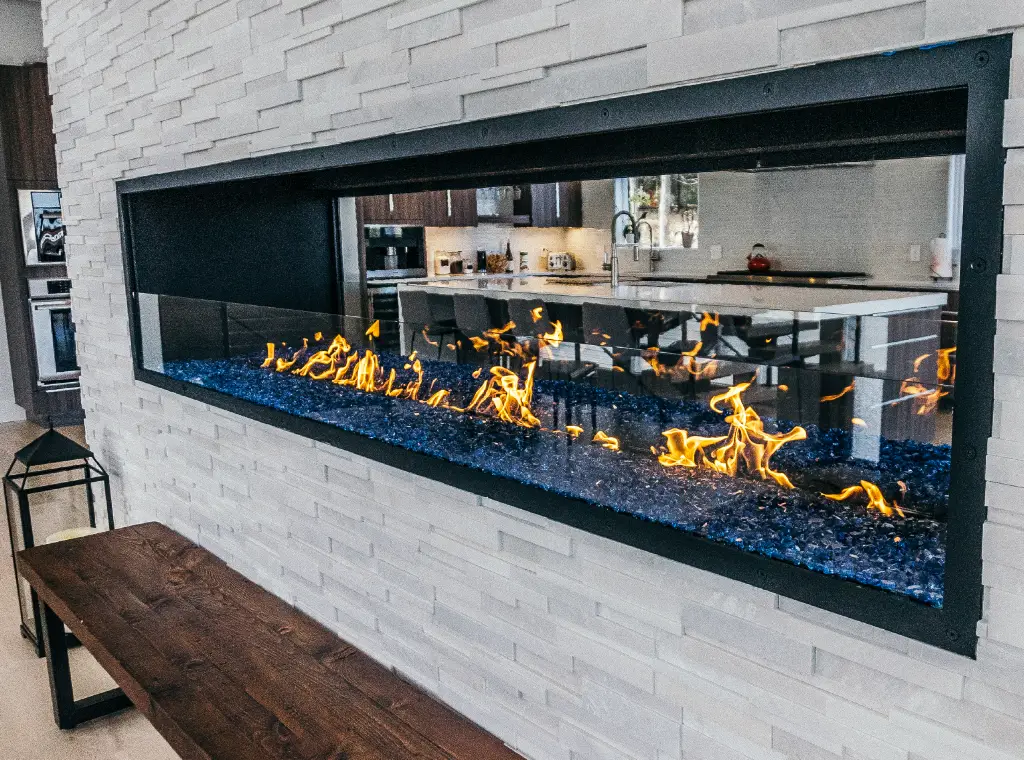
Regardless of layout, performance is foundational. Thoughtful engineering ensures that linear, peninsula, and four-sided gas fireplaces operate safely and predictably across a wide range of floor plans.
Controlled combustion supports clean, consistent operation and helps maintain comfort in open environments. Design factors such as placement, clearances, and airflow all contribute to reliable performance, regardless of configuration. These technical considerations carry as much weight as visual impact.
Ease of use is equally important. A gas fireplace should feel intuitive and dependable, encouraging daily enjoyment rather than second guessing. To learn more about how Acucraft approaches testing and performance, watch Fireplace Safety Testing and Innovation (Inside the Acucraft Lab).
Where Each Gas Fireplace Layout Makes the Biggest Impact
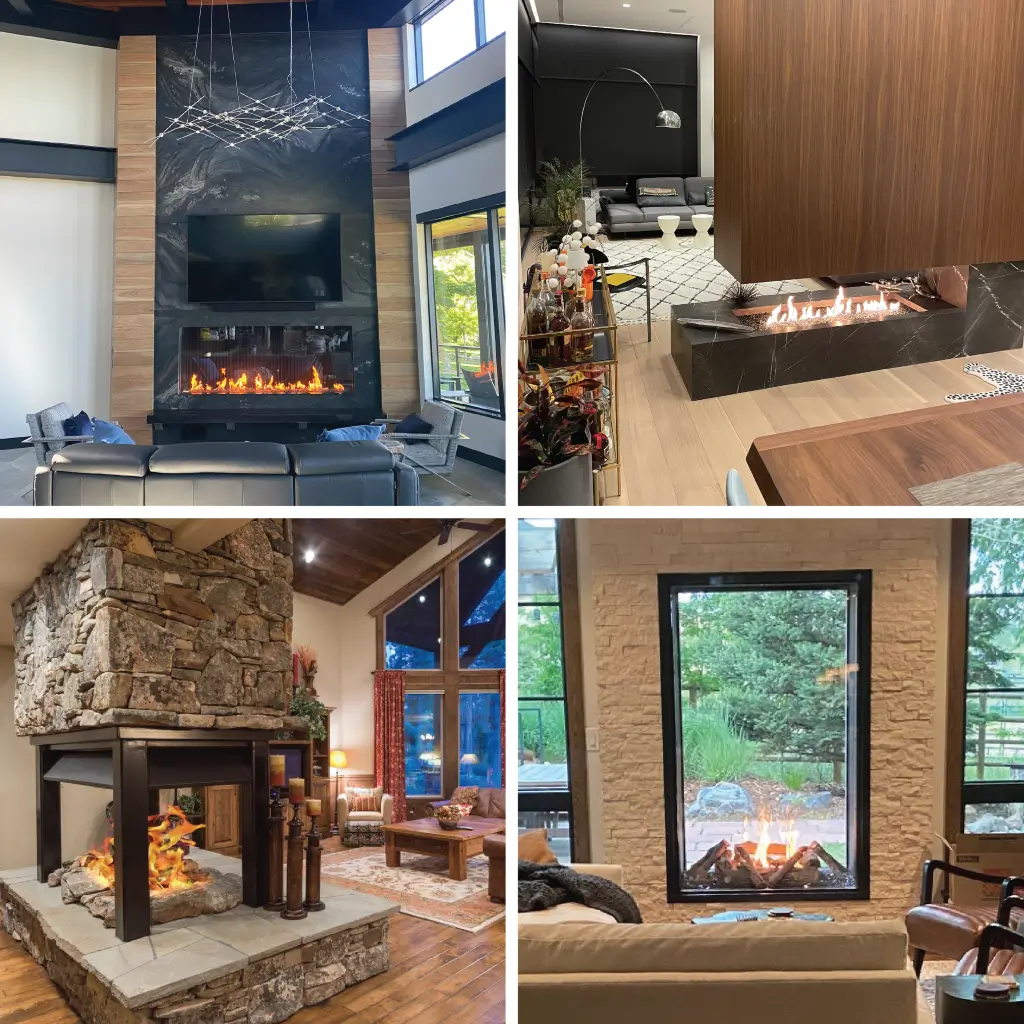
Each gas fireplace layout serves a different purpose within a home.
- Linear gas fireplaces excel in large living areas where clean lines and strong focal points are needed. They reinforce symmetry and visual order.
- Peninsula fireplaces are ideal for guiding transitions and defining zones within open plans. They help create structure without walls and support natural movement between spaces.
- Four-sided gas fireplaces create central gathering points that feel immersive and shared as they can be enjoyed from all angles without sacrificing views.
Indoor-outdoor environments benefit from layouts that maintain visual continuity across boundaries, reinforcing connection between interior and exterior spaces. When planned intentionally, fire supports flow without interrupting views or movement.
Let the Floor Plan Lead the Fire
There is no universal gas fireplace layout that works for every home. The right solution is determined by how a space is intended to function, how people move through it, and how adjacent rooms connect.
When layout decisions are addressed early in the design process, the fireplace becomes integrated into the architecture rather than applied afterward. Fire reinforces circulation, sightlines, and everyday use instead of competing with them.
Acucraft collaborates with designers, architects, builders, and homeowners to help evaluate and plan the appropriate configuration for each project. When the floor plan leads the fire, the result is a space that feels intentional, balanced, and built for long-term enjoyment.
Request more information or connect with one of our gas fireplace experts today. They can help you design a fireplace that makes a unique statement and adds value to a home.